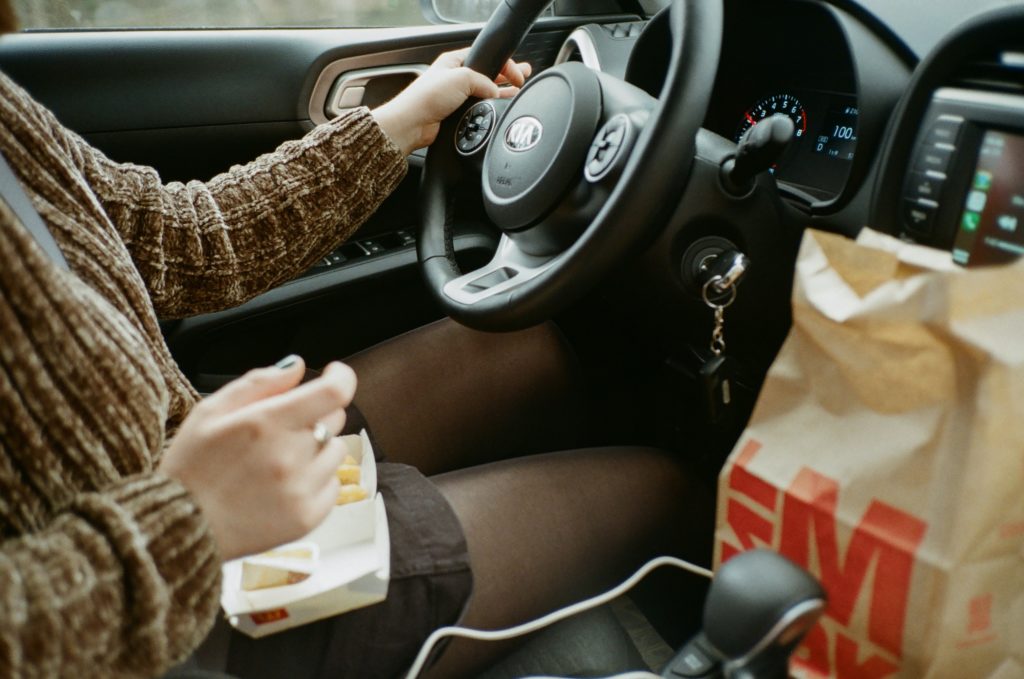
We have all done it. You grab a coffee on the way to work, eat a quick breakfast during your morning commute, or unwrap a sandwich because you don’t want to stop during a long drive.
It is dangerous to eat or drink while driving. These actions behind the wheel may seem harmless, particularly when traffic is light, and you are only taking a bite or sip. But anything that takes your attention, hands, or eyes away from driving can increase the risk of a crash.
Distracted driving does not always involve texting or talking on a cell phone. Everyday activities, including eating, drinking, adjusting the radio, reaching for an object, or interacting with passengers, can also take a driver’s attention away from the road.
Eating or drinking while driving is dangerous because it can create several different types of distraction.
A driver may look away from the road to unwrap food, pick up a drink, open a container, or locate a straw. Even a glance away can be dangerous when traffic conditions are changing. A vehicle traveling at highway speed can cover a significant distance in just a few seconds. Looking down at a meal or reaching for a drink means the driver may not see a vehicle slowing ahead, a pedestrian entering the roadway, or another unexpected hazard.
Safe driving requires a driver to maintain control of the steering wheel and other vehicle controls. Eating often requires at least one hand to leave the steering wheel. A driver may also have to use both hands to open packaging, hold food, or manipulate a drink. That can make it more difficult to react quickly if something unexpected happens.
Driving also requires concentration. A driver who is focused on eating, opening a container, cleaning up a spill, or searching for something in the vehicle may not be paying full attention to the road. This type of distraction can delay a driver’s response to changing traffic conditions.
Coffee and other beverages can create many of the same dangerous problems as food when driving. A driver may take their eyes off the road to pick up a cup, remove a lid, add a straw, or reach for a drink. A spill can be particularly dangerous because a driver may instinctively look down or attempt to clean it up while the vehicle is moving.
Hot beverages also create an additional safety concern. A driver who spills hot coffee on themselves may react suddenly, lose control of the vehicle, or take their attention completely away from the road.
Indiana’s distracted-driving law specifically addresses the use of telecommunications devices while driving. Indiana generally prohibits drivers from holding or using a telecommunications device while operating a motor vehicle, subject to certain exceptions. Eating a sandwich or drinking a beverage while driving is not necessarily a standalone violation of Indiana’s distracted-driving statute.
However, that does not mean eating and driving is safe, or that a driver’s conduct cannot become relevant in a personal injury case. If a driver becomes distracted while eating or drinking and causes a collision, the driver’s actions may be relevant when determining whether the driver acted negligently.
Drivers throughout Terre Haute, Vigo County, and the Wabash Valley encounter a variety of driving conditions every day. A driver may be traveling through an intersection, entering a highway, driving on a rural road, or navigating heavy traffic when something unexpected happens.
A distracted driver eating or drinking may not have enough time to recognize the danger and respond appropriately. Attorney Caleb Fleschner of Fleschner, Stark, Tanoos & Newlin says, “Distracted driving isn’t limited to looking at a cell phone. Anything that takes a driver’s attention away from the road can create a dangerous situation. Eating or drinking may seem like a small distraction, but when a driver misses a stoplight, fails to see another vehicle, or can’t react quickly enough, the consequences can be serious.”
Fortunately, preventing accidents related to distractions, such as eating and drinking, is relatively simple.
If you know you are going to be hungry during a long trip, eat before getting behind the wheel. Taking a few extra minutes before leaving is safer than trying to eat while driving.
If you are hungry or need to eat during a trip, find a safe place to stop. A parking lot, rest area, or other appropriate location gives you the opportunity to eat without trying to control a vehicle at the same time.
For shorter trips, waiting until you reach your destination may be the easiest solution. That five-minute wait could prevent a distraction from turning into a serious accident.
If you are injured in an accident caused by a driver who was distracted while eating or drinking, you may be entitled to compensation for the losses caused by the crash. Depending on the circumstances, a personal injury claim may include compensation for:
Evidence can be important in determining whether distraction played a role in a collision. Police reports, witness statements, photographs, surveillance footage, vehicle data, and other evidence may help establish what happened.
If you are involved in a collision and believe the other driver may have been distracted by eating or drinking, seek medical attention. Some accident-related injuries may not become apparent immediately.
It is also important to be cautious when speaking with insurance companies. The other driver’s insurance company does not represent you, and you should understand your rights before agreeing to a settlement.
It is dangerous to eat or drink while driving, but distracted driving can take many forms. Whether a driver was texting, reaching for an object, or otherwise failing to pay attention, the consequences can be devastating when that distraction causes a crash.
If you were injured in an automobile accident in Terre Haute, Vigo County, or elsewhere in the Wabash Valley, the personal injury attorneys at Fleschner, Stark, Tanoos & Newlin can investigate the circumstances of your accident and help you understand your legal options. Contact our office today to discuss your accident and learn more about your rights.
Fleschner, Stark, Tanoos & Newlin
N/a
The financial burden that often comes with a serious injury can be too much for many people to bear. Unexpected medical debt, damaged personal property, and the sudden loss of income can impact the budgets of most families. The good news is that a successful injury claim could help reduce that financial strain after a serious accident. Get in touch with a Terre Haute personal injury lawyer with Fleschner, Stark, Tanoos & Newlin to learn more.
Copyright ©2026 Fleschner, Stark, Tanoos & Newlin,