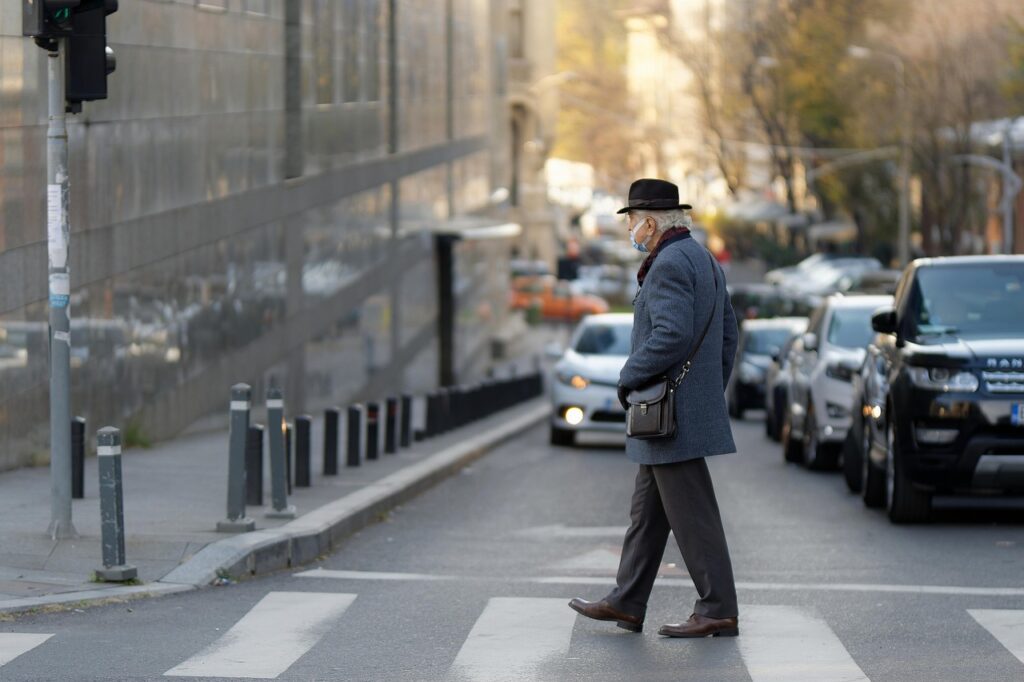

Pedestrian accidents can result in some of the most serious injuries on Indiana’s roads. Unlike people inside vehicles, pedestrians have virtually no physical protection when struck by a car, truck, or motorcycle. Even a collision at a relatively low speed can cause significant injuries.
Pedestrian accidents can happen in crosswalks, intersections, parking lots, residential neighborhoods, and other areas where people and vehicles share the road. Distracted driving, speeding, failure to yield, impaired driving, poor visibility, and other factors can contribute to these crashes.
If you or someone you love has been injured in a pedestrian accident, understanding what to do after the crash and how Indiana’s personal injury laws may apply can help you make informed decisions about your next steps.
Determining who is responsible for a pedestrian accident isn’t always straightforward. Drivers have a responsibility to follow traffic laws and exercise reasonable care around pedestrians, but pedestrians also have responsibilities under Indiana law.
Evidence from the accident can be important when determining fault. This may include:
Indiana follows a comparative fault system. Under Indiana law, a person’s recovery in a negligence claim can be reduced by their percentage of fault. A person who is more than 50% responsible for the injury generally cannot recover damages under Indiana’s comparative-fault statute.
Because fault can affect the amount of compensation available, it is important to preserve evidence and carefully evaluate the circumstances surrounding the collision.
Attorney Caleb Fleschner explains why determining responsibility can require more than simply looking at where the collision occurred: “Pedestrian accidents can happen very quickly, and the initial version of what happened isn’t always the complete story. Evidence can disappear, memories can change, and important details may not be obvious from the scene. That’s why thoroughly investigating how the collision occurred is so important when determining responsibility.”
If you or a loved one has been struck by a vehicle, your health and safety should come first. Some injuries may not be immediately apparent, so seek medical attention as soon as possible after the accident.
After receiving appropriate medical care, consider taking these steps:
Contact law enforcement and make sure the accident is properly reported. Obtain a copy of the police report when it becomes available.
Even if you feel relatively well immediately after the collision, certain injuries may not become apparent until later. Follow your healthcare provider’s recommendations and keep records of your treatment.
If you’re physically able to do so, photograph the accident scene, vehicle involved, road conditions, traffic signs, crosswalks, lighting, and any visible injuries.
Get the names and contact information of anyone who witnessed the collision. Independent witnesses may provide important information about what occurred.
Keep photographs, medical records, bills, insurance correspondence, and other documents related to the accident. Don’t assume that important evidence will remain available indefinitely.
Insurance companies may ask for information about the accident or your injuries. Before making statements or agreeing to a settlement, consider speaking with an attorney who can explain your rights and options.
Because pedestrians aren’t protected by a vehicle’s structure, injuries can be severe. Pedestrian accidents can result in:
The severity of an injury can depend on factors such as the speed and size of the vehicle, the point of impact, whether the pedestrian was thrown or struck again, and other circumstances surrounding the collision.
When another person’s negligence causes a pedestrian accident, an injured person may be able to pursue compensation for losses associated with the injury.
Depending on the circumstances, damages may include:
The types and amount of damages available will depend on the facts of the individual case, including the nature and severity of the injuries and the parties’ respective fault.
Important evidence can become more difficult to obtain as time passes. Witnesses may forget details, surveillance footage may no longer be available, and physical evidence at the accident scene can disappear.
That’s why it can be helpful to begin documenting the accident and exploring your legal options as soon as reasonably possible.
A pedestrian accident can leave you dealing with serious injuries, medical bills, lost income, and uncertainty about what happens next. You don’t have to navigate those issues alone.
At Fleschner, Stark, Tanoos & Newlin, our Indiana pedestrian accident attorneys can investigate the circumstances of your accident, help identify potentially responsible parties, and explain your legal options.
If you or someone you love has been injured after being struck by a vehicle, contact our office today for a free consultation.
Fleschner, Stark, Tanoos & Newlin
 N/a
N/a
The financial burden that often comes with a serious injury can be too much for many people to bear. Unexpected medical debt, damaged personal property, and the sudden loss of income can impact the budgets of most families. The good news is that a successful injury claim could help reduce that financial strain after a serious accident. Get in touch with a Terre Haute personal injury lawyer with Fleschner, Stark, Tanoos & Newlin to learn more.
Copyright ©2026 Fleschner, Stark, Tanoos & Newlin,

